

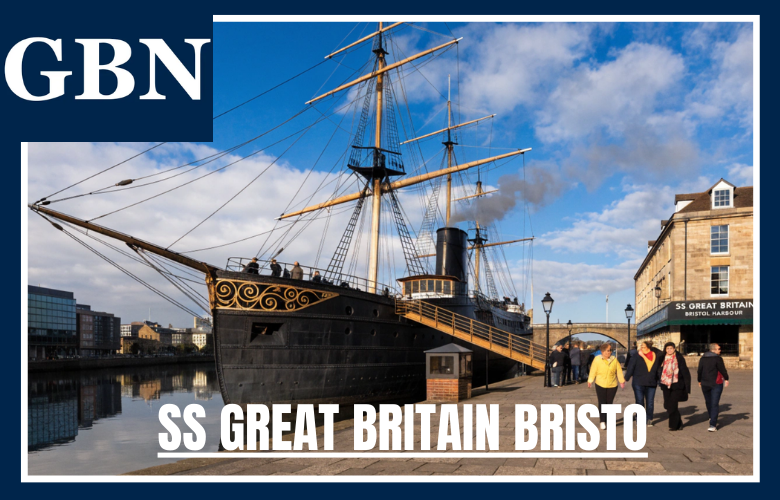
The SS Great Britain Bristol is one of the city’s best-known historic attractions and a fascinating reminder of Britain’s Victorian engineering achievements. Designed by Isambard Kingdom Brunel and launched in Bristol in 1843, the iron steamship was once one of the most advanced vessels in the world.
Today, visitors can step aboard the original ship at the Great Western Dockyard, explore its historic interiors and learn about the passengers and crew who travelled across the world. The attraction also includes the historic dry dock, the Glass Sea and museum displays covering Brunel, Victorian travel and the ship’s remarkable journey.
What makes SS Great Britain especially interesting is that it combines history with a real visitor experience. You are not simply looking at an old ship behind glass; you can walk through its decks and imagine what long-distance travel was like during the Victorian era.
For anyone visiting Bristol, it is a worthwhile attraction for discovering the city’s maritime heritage and understanding how Brunel helped shape modern transportation.
What Is SS Great Britain Bristol?
The SS Great Britain is a historic steamship preserved at the Great Western Dockyard in Bristol, close to the city’s Harbourside. It was designed by Isambard Kingdom Brunel and built in the same Bristol dockyard where visitors can see it today.
When it was launched in 1843, the vessel represented a major step forward in shipbuilding. Its iron hull, large size and screw propeller helped establish new possibilities for ocean travel.
The ship later had several different roles. It carried passengers across the Atlantic, transported emigrants to Australia, served as a troop ship and eventually became a cargo vessel.
Its long working life means that the attraction tells several connected stories rather than focusing on one period. Visitors can discover Victorian engineering, life at sea, global migration, military history, trade and the remarkable conservation work that brought the ship back to Bristol.
SS Great Britain History
The story of the ship began in Bristol during the early Victorian period. Brunel wanted to create a vessel capable of making long-distance journeys faster and more efficiently than many ships of the period.
The SS Great Britain was launched in Bristol Harbour in 1843. Its first passenger voyage to New York took place in 1845, marking the beginning of a career that would take the ship across several continents.
The vessel eventually became strongly associated with journeys to Australia. Thousands of passengers travelled aboard the ship, including emigrants seeking new opportunities overseas.
The ship’s history was not limited to passenger travel. It also carried troops during military campaigns and later operated as a cargo ship. According to the SS Great Britain Trust’s historical material, the vessel travelled to five continents and completed numerous voyages around the globe.
Isambard Kingdom Brunel and the Ship
Isambard Kingdom Brunel is central to understanding why the SS Great Britain remains so important.
Brunel was one of Britain’s most influential engineers. His work included major railway, bridge and maritime projects, and his approach to engineering often involved ambitious designs that challenged established ideas.
The SS Great Britain reflected that approach. Its combination of an iron hull and screw propulsion was innovative for its time and demonstrated how engineering could change international transportation.
For visitors, the connection with Brunel adds another layer to the experience. The attraction is not simply about an old ship; it shows how nineteenth-century engineering influenced the development of global travel.
What Can You See at SS Great Britain?
A visit involves considerably more than walking around the outside of the ship. The attraction combines the vessel itself with museums, historic spaces, conservation displays and experiences that help explain its wider story.
Step Aboard the Historic Ship
The main attraction is, naturally, the ship itself.
Visitors can walk through areas that reveal how different passengers and crew experienced life at sea. The contrast between accommodation classes provides an especially useful insight into Victorian society.
First-class spaces demonstrate the more comfortable side of nineteenth-century ocean travel, while the steerage areas show the much more basic conditions experienced by many emigrants.
The ship’s interior helps turn historical information into something visitors can physically experience.
Explore the Dry Dock
The historic dry dock is another major part of the attraction.
It is particularly significant because the SS Great Britain remains in the dock where it was originally built. Visitors can look beneath the vessel and understand the enormous scale of its iron hull.
The conservation system is one of the most interesting aspects of the site. A Glass Sea was introduced as part of a major conservation project, helping protect the lower section of the ship’s fragile iron hull from damaging moisture.
This means the dry dock serves both as a historic location and as an example of modern conservation engineering.
Discover the Glass Sea
The Glass Sea gives visitors an unusual view of the ship.
Instead of simply seeing the vessel from deck level, visitors can look down towards the hull and appreciate the scale of the structure beneath them.
The feature is particularly important because conservation is an ongoing responsibility. Preserving a nineteenth-century iron ship requires careful control of its environment and continuous specialist work.
For anyone interested in engineering, architecture or conservation, this is one of the most technically interesting parts of the visit.
Life on Board the SS Great Britain
One of the strongest elements of the attraction is its focus on people.
More than 30,000 passengers and crew travelled aboard the ship between 1845 and 1886, and the Trust has developed its Global Stories project to explore individual people and their journeys.
That human perspective makes the history easier to understand.
Passengers came from different backgrounds and travelled for different reasons. Some were emigrants looking for opportunities in Australia, while others travelled for work, family reasons, military service or business.
The experience of travelling depended heavily on a person’s social position. First-class passengers had access to considerably better facilities, whereas steerage passengers faced more basic accommodation.
Exploring these differences helps visitors understand that the history of the ship is also a history of class, migration and changing opportunities.
The SS Great Britain and Australian Migration
Australia became one of the most important destinations in the ship’s working life.
During the nineteenth century, increasing numbers of people travelled from Britain to Australia. Some were attracted by economic opportunities, while the discovery of gold in Australia also encouraged migration.
The journey was long by modern standards. The Trust’s visitor material notes that reaching Australia could take around 60 days, making the voyage a major undertaking for passengers.
Today, visitors can explore the stories of individuals connected with these voyages and gain a better understanding of what international migration meant before modern air travel.
The Ship’s Journey Around the World
The SS Great Britain did not spend its entire career travelling between Britain and Australia.
Its voyages took it across the Atlantic and to other parts of the world. The Trust’s Global Stories archive records journeys involving destinations across five continents and provides information about individual passengers and crew members.
This global history is one reason the ship remains relevant today.
Rather than being only a Bristol story, the SS Great Britain provides a window into the expanding international connections of the Victorian era.
From Working Ship to Historic Landmark
The vessel eventually stopped operating as the pioneering passenger ship for which it had originally been designed.
After further changes to its role, it became a cargo carrier. In 1886, after being damaged, the ship was taken to the Falkland Islands, where it was later used as a floating warehouse and eventually abandoned.
For decades, the future of the ship looked uncertain.
Its eventual return to Bristol became one of the most extraordinary chapters in its history.
How SS Great Britain Returned to Bristol
In 1970, the ship made its final journey back to Bristol.
After years in the Falkland Islands, a major rescue effort was organised to bring the historic vessel home. The ship was transported across the Atlantic and returned to the city in which it had originally been built.
The return was hugely significant for Bristol’s heritage.
Rather than allowing the remains of a pioneering ship to disappear, the project created the foundation for the museum and conservation attraction that exists today.
The Trust’s historical records identify 18 July 1970 as the date the vessel arrived back in Bristol.
SS Great Britain Museum Experience
The museum experience helps visitors understand the ship before and beyond simply walking through its decks.
Displays introduce the people connected with the vessel, the technology behind its construction and the wider historical circumstances surrounding its voyages.
The attraction also includes Being Brunel, which explores the life and work of Isambard Kingdom Brunel.
Together, these elements make the site particularly useful for visitors who want to understand the relationship between Brunel, Bristol and Britain’s industrial development.
Global Stories and the People of SS Great Britain
The human stories connected with the ship are an increasingly important part of the attraction.
The SS Great Britain Trust’s Global Stories project allows visitors and researchers to explore information about individual passengers and crew. The online archive currently contains records for more than 32,000 people.
This approach gives the ship’s history a personal dimension.
Instead of presenting the vessel only as an engineering achievement, it shows the people who travelled, worked and built their lives around its voyages.
For family historians and people researching ancestors who travelled by sea, these records can also provide an interesting starting point for further research.
Why SS Great Britain Matters to Bristol
The ship is closely connected with Bristol’s identity as a port city and centre of engineering.
Its original dockyard location provides an important physical connection with the city’s industrial past. Visitors are not simply looking at a historic object that has been moved into a modern museum; they are standing in the place where the ship was constructed.
That setting adds authenticity to the experience.
The attraction also demonstrates how Bristol was connected to international trade, migration, engineering and maritime travel during the nineteenth century.
SS Great Britain Conservation
Keeping the ship in good condition is a major technical challenge.
Iron is vulnerable to corrosion, particularly when exposed to moisture and changing environmental conditions. The Trust therefore uses specialised conservation methods to protect the historic structure.
The Glass Sea and controlled environment beneath the ship are particularly important parts of this work. The conservation project was developed to protect the iron hull while allowing visitors to continue seeing the ship from unusual viewpoints.
This makes the attraction valuable not only for history but also for anyone interested in modern heritage conservation.
New Plans for the Dockyard Museum
The SS Great Britain Trust is also developing the attraction for future audiences.
In June 2025, the Trust announced funding of more than £1 million for projects including a major redevelopment of the Dockyard Museum and a community-led heritage initiative. The planned museum redevelopment is intended to explore the experiences of more than 30,000 passengers and crew who travelled aboard the ship between 1845 and 1886.
The project also places greater emphasis on Bristol’s communities and on uncovering stories that have historically received less attention.
This is an important development because it shows that the SS Great Britain is not being treated as a static historical object. Its interpretation continues to evolve as researchers uncover new evidence and communities contribute different perspectives.
Is SS Great Britain Worth Visiting?
For most visitors interested in Bristol’s history, the SS Great Britain is well worth considering.
Its biggest advantage is the variety of experiences available in one location. You can explore a historic ship, learn about Victorian engineering, investigate Brunel’s work, discover migration stories and see a sophisticated conservation project.
It is particularly appealing to:
- History enthusiasts
- Families visiting Bristol
- Engineering enthusiasts
- Brunel fans
- Maritime history enthusiasts
- Visitors interested in Victorian Britain
- People researching migration and family history
- Tourists looking for distinctive Bristol attractions
The attraction also works well for visitors who are not normally interested in museums because much of the experience involves physically exploring the ship rather than simply reading displays.
SS Great Britain for Families
Families can benefit from the interactive nature of the attraction.
Children can explore the ship and see the difference between passenger accommodation, working areas and the spaces associated with the vessel’s machinery.
The scale of the ship also helps younger visitors understand how difficult long-distance travel was before modern aircraft and cruise ships.
For school-age children, the attraction can connect several subjects, including history, science, engineering, geography and social history.
How Long Should You Spend at SS Great Britain?
The amount of time needed depends on how deeply you want to explore the site.
Visitors who simply want to see the ship may need less time than those who want to explore the museums, Brunel displays, conservation areas and historical stories in detail.
A longer visit is worthwhile if you are particularly interested in Victorian engineering or maritime history.
It is also worth allowing time to explore the surrounding Bristol Harbourside area, where several other attractions, restaurants and cultural venues are located.
SS Great Britain Bristol Location
The SS Great Britain is located at the historic Great Western Dockyard in Bristol.
Its position is particularly convenient for visitors exploring the Harbourside and central Bristol because it sits within an area rich in museums, cultural attractions, restaurants and waterfront walks.
The location also contributes to the experience. The ship’s presence in its original Bristol dockyard environment makes the connection between the vessel and the city’s industrial past immediately visible.
Visitors should check the official SS Great Britain website before travelling for current opening information, ticket arrangements, accessibility details and any temporary changes.
What Makes SS Great Britain Different From Other Bristol Attractions?
Many Bristol attractions focus on a particular period, collection or subject.
The SS Great Britain brings several themes together.
It is simultaneously a historic ship, an engineering landmark, a migration story, a conservation project and a Bristol heritage site.
That combination gives the attraction considerable depth.
The original dockyard setting is another major advantage. Seeing the vessel where it was built creates a stronger connection with its history than viewing a ship that has been permanently relocated to an unrelated museum site.
What Can You Learn From a Visit?
A visit can provide insight into much more than the history of one vessel.
You can learn about:
- Victorian engineering
- Steam-powered transportation
- Iron shipbuilding
- Maritime trade
- Long-distance migration
- Life at sea
- Social class
- Australia’s nineteenth-century migration history
- Bristol’s industrial development
- Brunel’s engineering career
- Historic ship conservation
This broad subject range is one of the reasons the attraction remains relevant to modern visitors.
Also Read:Martin Lewis Advice on the UK State Pension Increase Campaign
Frequently Asked Questions
Where is SS Great Britain in Bristol?
SS Great Britain is preserved at the Great Western Dockyard in Bristol, close to the city’s Harbourside. The ship remains in the historic dock where it was originally built.
When was SS Great Britain launched?
The SS Great Britain was launched in Bristol in 1843. It later began passenger service and made its first voyage to New York in 1845.
How long did it take to travel to Australia on SS Great Britain?
Voyages to Australia could take around 60 days, making the journey a major undertaking for nineteenth-century passengers.
Why is SS Great Britain important?
The vessel is important because it represents a major development in nineteenth-century shipbuilding and ocean travel. Its history also connects Bristol with global migration, trade, engineering and maritime heritage.
Final Thoughts
The SS Great Britain Bristol offers a rare opportunity to experience Victorian engineering in the place where the famous ship was originally built. Brunel’s pioneering design, the vessel’s global voyages, the experiences of its passengers and crew, and its extraordinary return to Bristol all contribute to a much larger story about nineteenth-century Britain. The Glass Sea and conservation work add a modern engineering dimension, while the developing museum programme is bringing new personal and community perspectives into the story. For anyone exploring Bristol, particularly visitors interested in history, engineering, maritime heritage or unusual attractions, the SS Great Britain provides a memorable way to understand how one ship helped connect Bristol with the wider world.