

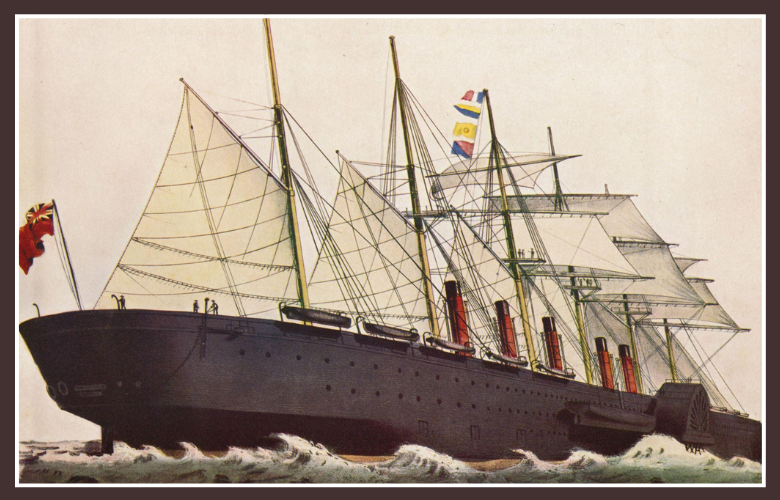
The SS Great Britain is one of the most important engineering achievements in British history. It marked a turning point in global travel and showed how innovation can completely transform transportation. Designed by the legendary engineer Isambard Kingdom Brunel, the ship introduced iron construction, steam propulsion, and screw propeller technology, which later became the foundation of modern shipbuilding.
Today, Brunel’s SS Great Britain is preserved in Bristol as a world-class museum attraction. It allows visitors to step directly into Victorian maritime history and explore real ship spaces, from cabins to engine rooms. This guide explains everything in a simple, human way, including history, design, tickets, visitor experience, and why it still matters today. It is written to help both tourists and history lovers understand the full importance of this iconic ship.
What is Brunel’s SS Great Britain
Is a historic steam-powered passenger ship that changed how people travelled across oceans. It was one of the first large ships built with an iron hull instead of wood. This made it stronger, safer, and more durable than earlier vessels.
The ship also used a steam engine and a screw propeller, which allowed it to travel without relying on wind. This was a major breakthrough in the 19th century. It made long-distance journeys more reliable and predictable.
The ship was first used for travel between Britain and America. Later, it became important for migration routes to Australia during the gold rush period. Today, it is preserved as Brunel’s SS Great Britain, where visitors can explore its original structure and experience maritime history in a real setting.
Brunel’s SS Great Britain History
The history of Brunel’s SS Great Britain shows both innovation and struggle. Brunel launched the ship in 1843. At that time, it was the most advanced passenger ship in the world.
It successfully completed early voyages across the Atlantic. This proved that iron ships powered by steam engines could work on a large scale.
In 1846, the ship ran aground in Ireland. This caused serious damage and forced repairs. After that, it was sold and repurposed for longer global routes.
The ship later transported thousands of migrants to Australia. These journeys were long and difficult, but they played a major role in global migration history. Eventually, the ship was retired and left in the Falkland Islands. It was later rescued and brought back to Bristol for restoration.
Key Features and Engineering Design
Introduced engineering features that changed shipbuilding forever.
The iron hull was one of the biggest innovations. It replaced wood and made the ship stronger and more resistant to damage during long sea voyages.
The screw propeller was another major breakthrough. It improved speed and stability compared to paddle wheels. It also worked better in rough seas.
The steam engine gave the ship constant power. This meant it could travel on a fixed schedule without depending on wind conditions.
Passenger design also improved. The ship had separate cabins for different classes, offering more comfort than earlier vessels.
SS Great Britain Tickets and Visitor Information
Visiting Brunel’s SS Great Britain requires a ticket, which includes access to the ship, museum, and dry dock area. The ticket gives visitors full access to all exhibitions and interactive displays.
Prices vary depending on age and family groups. Many tickets also include unlimited return visits for one year, which adds strong value.
Visitors are advised to book in advance, especially during weekends and holidays in Bristol. The attraction is popular with tourists, school groups, and history lovers.
The experience is designed to be educational and interactive. Visitors can walk through real ship spaces and learn how life worked onboard during the Victorian era.
Brunel’s SS Great Britain Photos and Experience
Photos of Brunel’s SS Great Britain are popular because the ship is visually unique and historically rich. It sits in a dry dock with a glass structure that creates a reflection effect, making it look like it is floating.
The deck offers wide views of the ship’s structure and design. Inside, visitors can see detailed Victorian cabins that show how passengers once travelled.
The engine room is one of the most impressive areas. It shows the powerful machinery that once drove the ship across oceans.
These visuals help people understand how advanced the ship was for its time and why it is still important today.]
Brunel’s SS Great Britain Map and Layout
The layout of Brunel’s SS Great Britain is designed to guide visitors through a historical journey. The site includes multiple areas such as the upper deck, passenger cabins, engine room, and exhibition spaces.
The map helps visitors explore the ship in order, starting from the top and moving downward. This follows how the ship was originally structured.
Each section tells part of the story, from construction to voyages to restoration. The layout makes it easy to understand how the ship operated in real life.
It also ensures visitors do not miss important exhibits during their visit.
SS Great Eastern and Brunel’s Engineering Legacy
The SS Great Eastern was another ambitious ship designed by Brunel. It was much larger than the SS Great Britain and was created for long-distance ocean travel.
Brunel wanted to build the biggest and most advanced ship in the world. The SS Great Eastern used advanced iron construction and powerful engines.
However, the ship faced technical problems and high costs. It was not commercially successful, but it showed what large-scale engineering could achieve.
Both ships together highlight Brunel’s vision. They show how innovation often involves risk, failure, and progress at the same time.
Benefits of Visiting SS Great Britain
Visiting Brunel’s SS Great Britain gives a real understanding of Victorian engineering and maritime history. It is not just a display but a full immersive experience.
Visitors learn how ships were built, how people travelled, and how migration shaped world history. It also helps people understand how technology changed global transport.
The attraction is suitable for families, students, and tourists. It combines education with storytelling in a simple and engaging way.
Overall, it is one of the most informative heritage experiences in the UK.
Pros and Cons
Brunel’s SS Great Britain has many strengths. It is historically important, fully restored, and highly educational. It offers a rare chance to walk inside a real Victorian ship.
However, it can become busy during peak seasons. A full visit may take several hours, which might not suit all visitors.
Despite these small limitations, it remains one of the most valuable maritime attractions in the UK.
Why People Choose SS Great Britain
People choose to visit the SS Great Britain because it offers a real experience of history. Visitors can walk through actual ship spaces instead of just viewing exhibits.
It also provides strong educational value. Families and students learn about engineering and global travel in a simple way.
Tourists choose it because it is one of Bristol’s most famous attractions. It combines history, innovation, and storytelling in one place.
Is Brunel’s SS Great Britain Worth Visiting
Yes, Brunel’s SS Great Britain is absolutely worth visiting. It offers a rare opportunity to explore a real historic ship that changed world travel.
Visitors can see how people lived, worked, and travelled during the Victorian era. The experience is interactive, educational, and easy to understand.
It is one of the best heritage attractions in the UK. It combines engineering history with real human stories.
For anyone visiting Bristol or interested in British history, it is a must-see destination.
FAQs
What is Brunel’s SS Great Britain famous for
It is famous for being the first iron-hulled steamship with a screw propeller.
Where is it located
It is located in Bristol, United Kingdom.
How long does a visit take
Most visitors spend 2 to 3 hours exploring the site.
What can you see inside
You can explore cabins, decks, engines, and exhibitions.
What is SS Great Eastern
It is another large ship designed by Brunel, known for its size and engineering ambition.
Conclusion
Brunel’s SS Great Britain remains one of the most important engineering achievements in British history. It changed maritime travel and introduced technologies that shaped modern shipbuilding.
Its history reflects innovation, challenge, and global impact. From transatlantic travel to migration journeys, it played a major role in world history.
Today, its restoration in Bristol allows visitors to experience this legacy in a real and meaningful way. It is more than a museum. It is a journey into the past.
For anyone interested in history, travel, or engineering, SS Great Britain is one of the most valuable and memorable attractions in the UK.