

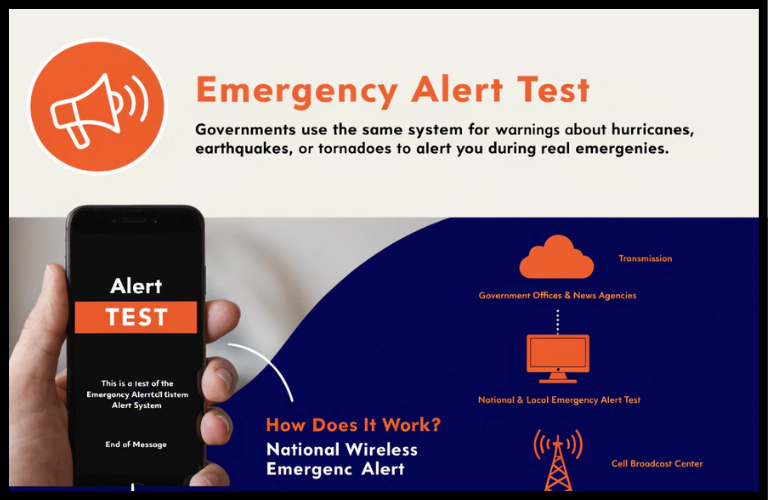
An emergency alert test is a planned safety check used by government authorities to ensure that national warning systems are working correctly. These systems are designed to send urgent messages to millions of people at the same time through mobile phones, television, and radio networks. During an emergency alert test, users may hear a loud alarm sound or see a notification on their device, even if it is on silent mode. The message clearly states that it is only a test and not a real emergency. The purpose is to confirm that alerts can be delivered quickly and reliably when real danger occurs.
What is Emergency Alert Test?
An emergency alert test is a controlled simulation used by government authorities to check whether national warning systems are functioning correctly. It is designed to evaluate how quickly and effectively emergency messages can be delivered to the public. This includes testing mobile networks, broadcast systems, and central alert platforms that work together during real emergencies.
During this process, millions of devices may receive the same alert simultaneously. The message always clearly states that it is a test and not a real danger. This ensures that users do not panic or take unnecessary action. The test helps authorities confirm that the entire communication system is working as intended and can handle large-scale alerts without delays or failures.
The main purpose of this process is to ensure reliability. In a real emergency situation, even a few seconds of delay can make a major difference in public safety. By running regular tests, governments can identify technical issues early and fix them before they become serious problems.
Purpose and Importance of Emergency Alert Systems
Emergency alert systems are designed to protect lives by delivering critical information as quickly as possible. These systems are used during natural disasters, extreme weather events, fires, floods, and other situations where immediate public awareness is essential. The goal is to ensure that people receive instructions quickly so they can take appropriate action to stay safe.
One of the most important functions of these systems is reliability. Governments must ensure that messages can reach millions of people at the same time without interruption. This is why regular testing is essential. It helps confirm that mobile networks and broadcast systems can handle large volumes of communication even during peak usage.
Another important purpose is public awareness and education. Many people are not familiar with how emergency alerts look or sound. By experiencing test alerts, individuals become more familiar with the system and are less likely to panic during real emergencies. This improves response behavior and helps reduce confusion in critical situations.
How Emergency Alert Systems Work in Practice
Emergency alert systems operate through a centralized communication network controlled by national authorities. When an alert is triggered, a signal is sent simultaneously to mobile network providers, television broadcasters, and radio stations. These networks then distribute the message to all connected devices within a specific region or across the entire country.
The system is designed to bypass normal communication traffic so that messages are delivered instantly. This ensures that even if mobile networks are busy or overloaded, emergency alerts still reach users without delay. Once the message is received, devices produce a loud sound, vibration, and a visible notification on the screen.
After the alert is sent, monitoring systems track delivery performance. Authorities analyze how quickly the message reached users and whether any technical issues occurred. This data is used to improve system efficiency and ensure better performance in future emergencies.
What Happens During Emergency Alert Test
When an emergency alert test is activated, users experience a sudden interruption on their devices. The most noticeable feature is a loud alarm sound that lasts for several seconds. This sound is designed to capture attention immediately, even if the phone is in silent mode or do not disturb mode.
Along with the sound, the device vibrates strongly and displays a full-screen message. The message clearly states that it is a test and that no action is required. This is important because it helps prevent confusion and ensures that users understand the situation correctly.After a few seconds, the alert usually disappears automatically. In some cases, users may need to manually close the notification. The entire process is designed to be simple, fast, and easy to understand so that people of all ages can recognize it.
Difference Between Test Alerts and Real Emergency Alerts
It is very important to understand the difference between test alerts and real emergency alerts. Although they may appear similar at first glance, their purpose and meaning are completely different. A test alert is scheduled in advance and used only for system evaluation. It clearly indicates that it is a test and does not require any action from the public. Its main purpose is to check whether communication systems are working properly.
A real emergency alert, on the other hand, is issued during actual danger. It may include instructions such as evacuating an area, moving to safety, or avoiding specific locations. Real alerts require immediate attention and action, as they are issued to protect lives and ensure public safety. Understanding this difference is essential because it helps people respond correctly in both situations without panic or confusion.
Importance of Regular Testing for Public Safety
Regular testing of emergency alert systems is essential to maintain public safety infrastructure. Without testing, there is a risk that systems may fail during real emergencies. Testing ensures that all components of the communication network are functioning properly and can deliver messages without delay.
Another key benefit of regular testing is system readiness. It allows authorities to detect and fix technical issues before they become critical. This ensures that the system remains reliable at all times.
Testing also helps improve public confidence. When people experience test alerts, they become familiar with the system and understand how it works. This reduces panic and improves response during real emergencies where quick action is necessary.
How Often Emergency Alert Tests Are Conducted
The frequency of emergency alert tests varies depending on government policies and safety regulations in each country. In most regions, these tests are conducted once or twice a year to ensure system reliability. Additional tests may be performed after system updates or technical improvements. This helps ensure that new changes do not affect performance or message delivery.
Regular testing is important because communication technology is constantly evolving. Without routine checks, small technical issues could go unnoticed until a real emergency occurs, which could lead to serious consequences.
How to Respond During Emergency Alert Test
When a test alert appears on your device, the most important thing is to stay calm. The sound may be loud and unexpected, but it is completely safe. The message will clearly indicate that it is only a test and no action is required.
You should read the message carefully and avoid contacting emergency services unless there is a real emergency. It is also helpful to inform other family members, especially children or elderly individuals, so they are not confused by the alert. After reading the message, you can simply dismiss it and continue your normal activities. The system is designed to be informative, not disruptive.
Key Features of Modern Alert Systems
Modern emergency alert systems are designed to be fast, reliable, and highly visible. They include loud audio alerts, strong vibration signals, and full-screen notifications to ensure that no message is missed.
The alerts are also designed in simple language so that people of all ages can understand them quickly. These systems are built to function across multiple networks and devices at the same time, ensuring wide coverage and fast delivery. These features make emergency communication more effective and help ensure public safety during both test scenarios and real emergencies.
(FAQs)
1. What is an emergency alert test?
An emergency alert test is a controlled system check used by government authorities to ensure that national warning systems are working properly. It is designed to confirm that emergency messages can be delivered quickly and accurately to the public when needed.
2. Why do I receive an emergency alert test on my phone?
You receive it because your device is connected to a mobile network in an area where the test is being carried out. It helps authorities verify that alerts are reaching users without delay.
3. Is an emergency alert test dangerous or something to worry about?
No, it is completely safe. It is only a system check and does not indicate any real emergency or threat. The message always clearly states that no action is required.
4. Why is the alert sound so loud during the test?
The sound is designed to grab attention instantly, even if your phone is on silent mode. This ensures that important warnings are never missed during real emergencies.
5. How long does an emergency alert test usually last?
Most alerts last only a few seconds. After that, the notification disappears automatically or can be closed manually by the user.
Conclusion
An emergency alert test is an essential part of maintaining a strong and reliable public safety system. It ensures that governments can quickly communicate with citizens during real emergencies such as floods, fires, or severe weather events. Although the alert sound may feel sudden or alarming, it is important to remember that it is only a test and does not indicate any real danger. These tests help improve system performance, identify technical issues, and increase public awareness. By understanding how the system works, people can respond calmly and confidently, ensuring better preparedness and safety in real emergency situations.