

The oxford nanopore share price has become a focal point for investors interested in high-growth biotechnology and genomics innovation. As a pioneer in real-time DNA sequencing, Oxford Nanopore Technologies has introduced technology that challenges traditional laboratory-based methods. This shift has opened new possibilities in healthcare, disease detection, and scientific research, making the company highly relevant in a rapidly evolving global market. Since listing on the London Stock Exchange, the stock has moved through cycles of strong optimism and sharp corrections. These movements reflect the broader reality of investing in innovation-driven companies, where expectations often change faster than financial results.
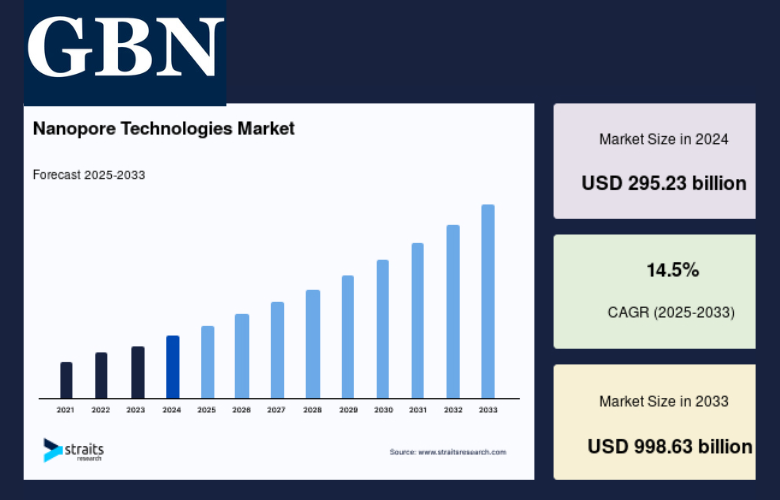
Investor interest is not just about current performance but about future potential. The company operates in a sector expected to grow significantly over the next decade, driven by advancements in personalized medicine and genomics. However, market sentiment can shift quickly when growth projections are adjusted or external conditions change. This makes the stock both exciting and unpredictable. For readers aiming to understand its long-term value, it is essential to look beyond daily price movements and focus on structural growth drivers. A balanced perspective helps separate short-term noise from meaningful trends.
Oxford Nanopore Share Price Live UK Overview
The latest market data for Oxford Nanopore Technologies shows the share price trading at 108.50 GBX on the London Stock Exchange, reflecting a daily gain of +3.83%. The stock opened at 107.80 and moved between a low of 105.20 and a high of 110.80 during the session. With a market capitalisation of around £1.05 billion, the company remains an important mid-cap player in the global genomics and biotechnology industry. The 52-week range of 104.00p to 224.80p highlights how volatile the stock has been over the past year.
This live positioning is important because the share price is currently sitting close to its yearly low range. When a stock trades near support levels like this, it often reflects uncertainty in investor sentiment but can also indicate potential value accumulation. Market participants are now watching closely to see whether this level holds or breaks. A sustained hold above this range could suggest stabilization, while failure may lead to further downside pressure.
Oxford Nanopore Share Price Chart
Theshows a long-term correction phase following strong post-IPO highs. After initially trading above 200p and reaching even higher levels during early investor optimism, the stock entered a sustained downward trend as growth expectations were reassessed. This is a common pattern in high-growth biotechnology companies where early valuation is driven by future potential rather than current earnings.
More recently, the chart shows repeated reactions around the 104p–110p area, which is now acting as a key support zone. Buyers have consistently stepped in at these levels, suggesting early signs of accumulation. However, the stock still faces strong resistance near 120p. A breakout above this level would be a significant technical signal that could indicate a shift toward recovery. Until that happens, the price remains in a consolidation phase rather than a confirmed uptrend.
Why Oxford Nanopore Share Price Is Falling
The decline in the Oxford Nanopore share price is not the result of a single issue but a combination of several structural and market-driven factors. One of the most important reasons is the reset in growth expectations after the IPO phase. Initially, investors priced the company for very high global expansion based on its disruptive sequencing technology, but actual financial results have led to a more realistic valuation approach.
Another major factor is the company’s ongoing focus on reinvestment rather than profitability. Since it is still scaling operations, profits remain limited, and this makes the stock more sensitive to market sentiment. In periods of higher interest rates, investors tend to move away from loss-making growth companies, which adds pressure on valuation. This shift in investor behaviour has played a major role in the recent decline.
The broader biotechnology sector has also been under pressure. Reduced risk appetite, funding challenges, and slower adoption cycles have affected many similar companies. Competition from established players such as Illumina and Pacific Biosciences of California Inc further adds pressure on market expectations. All of these combined factors explain why the stock has been trending downward over time.
UK Performance History
The historical performance of the Oxford Nanopore share price reflects a typical lifecycle of an innovative growth company. After its IPO, the stock saw strong investor enthusiasm, driven by expectations of rapid adoption of its sequencing technology. This led to elevated valuations in the early trading phase, where optimism was the primary driver of price action.
However, as the company progressed and real financial data became available, the market began to reassess its expectations. This resulted in a gradual correction phase, where the share price moved significantly lower from its earlier highs. The 52-week range between 104.00p and 224.80p shows how much sentiment has shifted over time. Despite this correction, the company continues to maintain strong relevance in the genomics sector, supported by its technological innovation and global research applications.
Oxford Nanopore Share Price Forecast 2026
The 2026 outlook for the suggests a potential stabilisation phase followed by gradual recovery, depending on business performance and market conditions. If the company continues to improve revenue growth and operational efficiency, the stock could move toward the 140p to 180p range over time. A breakout above 120p resistance would be an early sign of stronger bullish momentum.
Long-term growth potential remains supported by the expanding genomics industry. Demand for DNA and RNA sequencing is increasing across healthcare, diagnostics, and research applications. This creates a strong structural tailwind for the company. If Oxford Nanopore successfully expands into clinical markets and strengthens recurring revenue streams, its long-term valuation could improve significantly.
However, risks remain present. Slower adoption, competitive pressure, and macroeconomic uncertainty may continue to influence short-term performance. The stock is likely to remain volatile, meaning investors must consider both upside potential and downside risk when forming expectations.
Investment Perspective: Risk and Opportunity Balance
From an investment perspective, Oxford Nanopore represents a combination of high innovation potential and financial uncertainty. The company operates in a cutting-edge industry with strong long-term growth prospects. Its real-time sequencing technology provides unique advantages that could drive future demand across multiple sectors.
At the same time, the business is still in a development phase, meaning profitability is not yet stable. This creates volatility in the share price and makes it sensitive to market sentiment changes. For long-term investors, current levels may be seen as a potential accumulation zone, while short-term investors may prefer to wait for confirmation of trend reversal.
A balanced approach is essential when evaluating this stock. Diversification and risk management are important due to the uncertainty associated with early-stage growth companies.
Frequently Asked Questions (FAQ)
What is the Oxford Nanopore share price today?
The latest price is 108.50 GBX, with intraday movement between 105.20 and 110.80.
Why is falling?
It is mainly due to slower growth expectations, lack of consistent profitability, and broader biotech sector weakness.
What is the 52-week range?
The stock has traded between 104.00p and 224.80p over the past year.
Is Oxford Nanopore a good long-term investment?
It may offer long-term potential due to its genomics technology, but it carries high volatility and execution risk.
Conclusion:
The Oxford Nanopore share price remains in a crucial phase where the market is trying to balance long-term innovation potential with short-term financial reality. Recent trading around the lower end of its 52-week range shows that sentiment has been cautious, but the latest rebound from support levels suggests that selling pressure may be stabilizing. This type of price behavior is common in high-growth biotechnology companies as investors reassess valuation after earlier optimism.
Overall, the stock continues to be driven by three main forces: growth expectations, profitability timeline, and broader biotech market sentiment. While the company’s technology in real-time DNA sequencing is widely viewed as highly innovative, the share price reflects uncertainty about how quickly this innovation can translate into consistent earnings. This gap between potential and financial performance is the main reason behind recent volatility and downward pressure.
GO BRITAIN NEWS